VVFA Modern | Artists | Willem de Kooning (Dutch/American, 1904 - 1997)

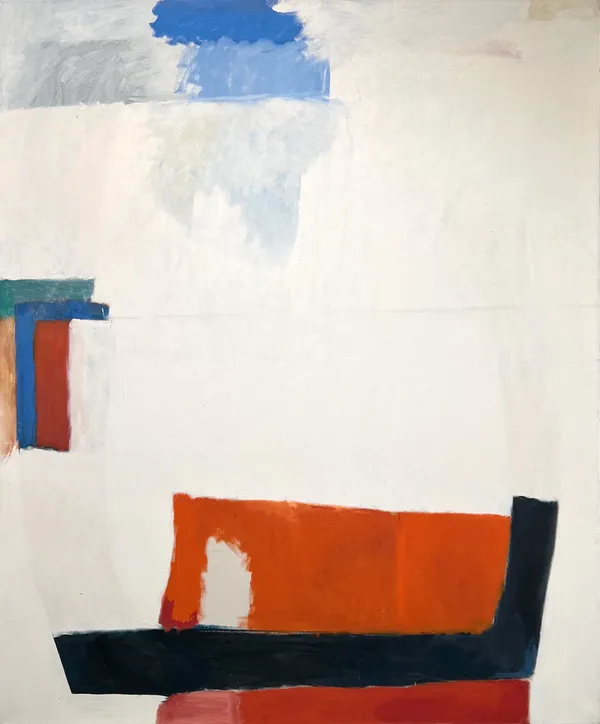
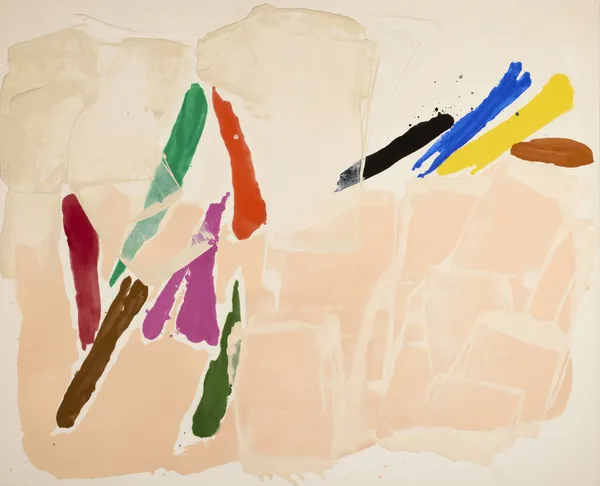
  • The Birds, 1972
  • Willem de Kooning (Dutch/American, 1904 - 1997)
  • The Birds, 1972, February 17, 1972
  • Oil on newspaper
  • 23 1/4 x 30 x inches
  • Signed lower right: De Kooning
  • Provenance: Acquired directly from the artist; Property of Rainbow Art Foundation; Christie's, NY Contemporary Art Sale, May 13, 1981 Lot no. 52; Feingarten Galleries, Los Angeles, CA; Private Collection, Beverly Hills, CA
  • SOLD
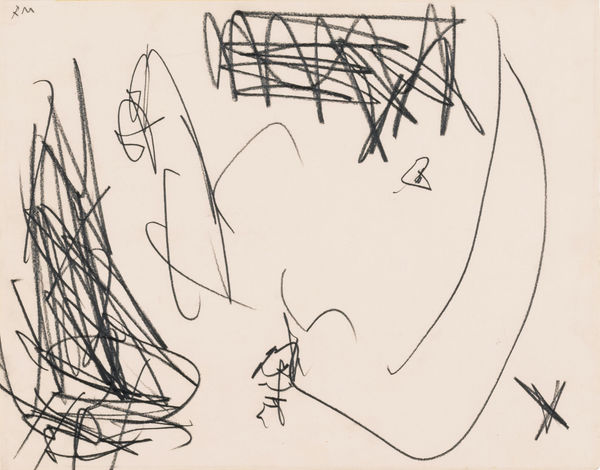
  • Untitled, Woman Series
  • Willem de Kooning (Dutch/American, 1904 - 1997)
  • Untitled, Woman Series, 1950
  • Charcoal on paper
  • 11 x 8 x inches
  • Signed bottom right
  • Provenance: Private Collection, Los Angeles, CA Collection of Taylor Robinson, Columbus, Ohio (1986-2002) Robinson Family Trust, Austin, Texas (2002) Collection of Albert Allen, Manitou Springs, Colorado
  • SOLD
  • Untitled, Woman Series
  • Willem de Kooning (Dutch/American, 1904 - 1997)
  • Untitled, Woman Series, 1950
  • Charcoal on paper
  • 11 x 8 x inches
  • Signed lower right
  • Provenance: Private Collection, Los Angeles, CA Collection of Taylor Robinson, Columbus, Ohio (1986-2002) Robinson Family Trust, Austin, Texas (2002) Collection of Albert Allen, Manitou Springs, Colorado
  • SOLD
The leader in Abstract Expressionism in the mid-20th century, Willem de Kooning was the founder of the New York School of action painting. For him and his followers, process in creating their work was as important as the final result. He was married to Elaine de Kooning, also an artist, whose promotion of him through writing, lectures, and socializing is thought to be a key factor in his success.

He was born in Rotterdam, the Netherlands, a tidy, organized country whose culture was a marked contrast to his chaotic approaches to canvases. In 1916, he apprenticed as a commercial artist, and for eight years during his commercial art career, attended evening classes at the Rotterdam Academy of Fine Arts and Techniques. During this time, he was exposed to the De Stijl geometric design movement led by Piet Mondrian and to the Cubists in Paris including Pablo Picasso.

De Kooning spent two years in Belgium and emigrated as a stowaway on a boat to New York City in 1926. He lived in Hoboken, New Jersey and earned money as a house painter while doing his own painting in the evenings. He also worked for federal arts projects, the W.P.A. and F.A.P., and did American Scene-style painting at that time. He became a friend of and was much influenced by Arshile Gorky, with whom he explored Cubism and other modernist methods. Gorky's suicide in 1948 was a terrible blow to DeKooning, and seemed to inspire an unleashing of violent, highly emotive paintings that were much more aggressive and violent with elements of accident playing an increasing role in composition.

From the mid 1940s, he had been making a living as a fine artist and developed as New York's major avant-garde figure. In 1948, he had his first one-man show, which was black and white paintings, and by the 1950s was the dominant leader of the Abstract Expressionist movement emulated across the country. However, as years passed, he became more sought after as a philosopher of the movement than for his artwork, which some critics thought declined in quality as his reputation built.

In the 1930s and 40, his work had major themes of abstracted human figures and pure abstraction. Many of his pieces were flattened biomorphic forms suspended in space with ragged edges and unfinished appearance. His depictions of women, which many have thought to be demeaning, began in the late 1930s and were at first semi-realistic but by the 1940s were distorted and intermingled with background colors.

In 1946, he began a series of black and white paintings that gave the appearance of all restraint having been lifted because of their slap/dash markings, jagged and torn edges, and random splashes of paint. However, his works seemed always to have a central axis point, a characteristic from his European training and something that set him apart from other Abstract Expressionists.

After 1950, DeKooning focused on the theme of women and their various roles of maternal figure, sexual partner, and destructive force. Most of the works are ambiguous and suggest a variety of interpretations. Some of his paintings during this period were pure abstractions made with swift gestures, but they did not have the velocity or energy of his contemporary Jackson Pollock.

Collections
Museum of Modern Art
Metropolitan Museum of Art
Whitney Museum of American Art
Guggenheim Museum, NY
Brooklyn Museum of Art
National Gallery of Art, Washington DC
Corcoran Gallery of Art, Washington DC
Smithsonian American Art Museum Wadsworth Atheneum, CT
Art Institute of Chicago
Carnegie Museum of Art, Pittsburgh
Cleveland Museum of Art
Baltimore Museum of Art
Dayton Art Institute, OH
Hirshhorn Museum, Washington DC
Walker Art Collection, Minneapolis
Albright-Knox Art Gallery, Buffalo NY
Phillips Collection, Washington DC
Detroit Institute of Arts
Fine Arts Museums of San Francisco
Yale University Art Collection, New Haven CT
Harvard University Art Museums, MA
Princeton University Art Museum
Museum of Contemporary Art, Los Angeles
Tate Gallery, London
Thyssen-Bornemisza Museum, Madrid
National Gallery of Australia
Guggenheim Collection, Venice
Kunstmuseum, Basel
Stedelijk Museum of Modern Art, Amsterdam
Staatsgalerie Stuttgart, Germany