VVFA Modern | Artists | Byron Browne (American, 1907 - 1961)

  • Blue Lion with Dancer
  • Byron Browne (American, 1907 - 1961)
  • Blue Lion with Dancer
  • Oil on canvas
  • 46 x 36 x inches
  • Signed and dated 1946 lower right
  • SOLD
  • Arena
  • Byron Browne (American, 1907 - 1961)
  • Arena
  • Oil on canvas
  • 24 x 30 x inches
  • Signed lower right
  • SOLD
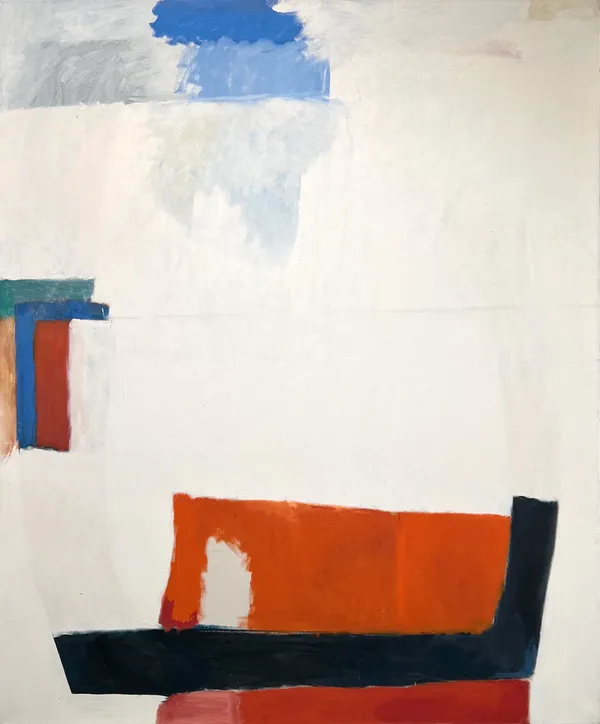
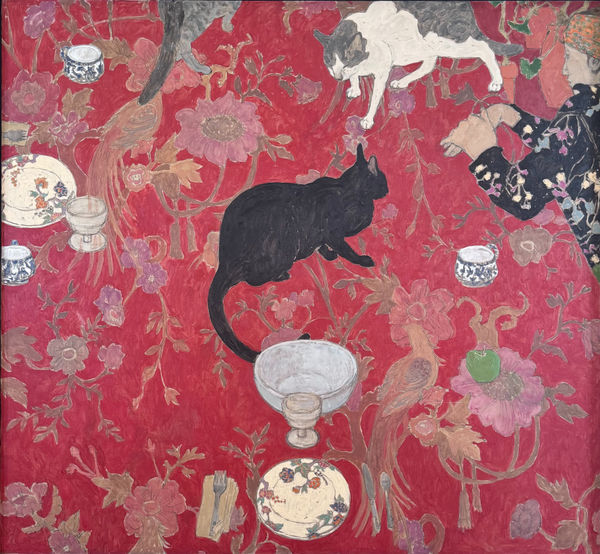
Like Walt Kuhn, Byron Browne found inspiration in the circus for a series of paintings depicting circus performers and animals. Arena is a mature work from the series, which he worked on throughout the 1940’s. Browne breaks down his subjects to basic shapes and colors in the same way Picasso did with his figures. Browne approaches cubism at this time but refrains from allowing it to interfere with his strong, representational depiction of the imagery.

Byron Browne was a founding member of the Abstract American Artists (AAA) group which was established in 1936. Although he was an abstract painter, Browne's work was rarely without some reference to nature. Arena is an example of his more biomorphic work in which things found in nature were distilled into geometric shapes. Particular forms are recurrent in his paintings, creating a private iconographical language. The circus performers, one standing upside down while another tames a lion these characters found in Arena are some of Browne's commonly used imagery at this time of his career. Throughout the 1930s and most of the 1940s, American abstractionists could scarcely find an audience due to the popularity of figurative art. In a 1937 editorial, Browne and six other members of the AAA responded to an art critic's statement that abstract art had no meaning: ". . . It is our very definite belief that abstract art forms are not separated from life, but on the contrary are great realities . . . made by artists who walk the earth, who see colors (which are realities), squares (which are realities, not some spiritual mystery), tactic surfaces [sic], resistant materials, movement."

Byron Browne was a central figure in many of the artistic and political groups that flourished during the 1930s. He was an early member of the Artists' Union, a founding member of the American Abstract Artists as stated before, and participated in the Artists' Congress until 1940, when political infighting prompted Browne and others to form the breakaway Federation of Modern Painters and Sculptors. Browne's artistic training followed traditional lines. From 1925 to 1928, he studied at the National Academy of Design, where in his last year he won the prestigious Third Hallgarten Prize for a still-life composition. Yet before finishing his studies, Browne discovered the newly established Gallery of Living Art. There and through his friends John Graham and Arshile Gorky, he became fascinated with Picasso, Braque, Miro, and other modern masters.

The mid 1930s were difficult financially for Browne. When she met him in October 1934, Rosalind Bengelsdorf Browne recalled that her future husband's daily diet consisted of a quart of milk, a box of cornmeal, a head of lettuce, and some raisins. His work was exhibited in a number of shows, but sales were few. Relief came when Burgoyne Diller began championing abstraction within the WPA's mural division. Browne completed abstract works for Studio D at radio station WNYC, the U.S. Passport Office in Rockefeller Center, the Chronic Disease Hospital, the Williamsburg Housing Project, and the 1939 World's Fair. Browne was also involved with Léger's mural project for the French Line terminal building that was canceled after officials discovered Léger's communist sympathies.

Although Browne destroyed his early academic work shortly after leaving the National Academy, he remained steadfast in his commitment to the value of tradition, and especially to the work of Ingres. The abstract quality of Ingres's work held special appeal not only for Browne, but for John Graham and Arshile Gorky. Rosalind Bengelsdorf Browne remembered Gorky waving an Ingres reproduction around at the opening of the first American Abstract Artists annual exhibition and proclaiming that the French master was more "abstract" than all the work in the exhibition. Browne believed, with his friend Gorky, that "Every artist has to have tradition. Without tradition art is no good. Having a tradition enables you to tackle new problems with authority, with solid footing.”

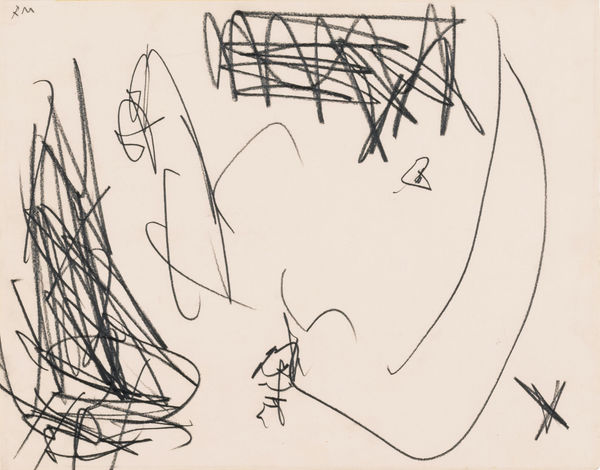
Browne's stylistic excursions took many paths during the 1930s. His WNYC mural reflects the hard-edged Neo-plastic ideas of Diller, although a rougher Expressionism better suited his fascination for the primitive, mythical, and organic. A signer, with Harari and others, of the 1937 Art Front letter, which insisted that abstract art forms "are not separated from life," Browne admitted nature to his art---whether as an abstracted still life, a fully nonobjective canvas built from colors seen in nature, or in portraits and figure drawings executed with immaculate, Ingres-like finesse. The classical drawings, a group of which were exhibited at Washburn Gallery in 1977, show heads (often of cross-eyed women) and classically garbed and garlanded seated figures. They have important stylistic parallels to John Graham's paintings and drawings of the period. He advocated nature as the foundation for all art and had little use for the spiritual and mystical arguments promoted by Hilla Rebay at the Guggenheim Collection: "When I hear the words non-objective, intra-subjective, avant-garde and such trivialities, I run. There is only visible nature, visible to the eye or, visible by mechanical means, the telescope, microscope, etc." The idea of portraying matter visible through telescope or microscope parallels the fusion of scientific and artistic vision discussed by Rosalind Bengelsdorf.

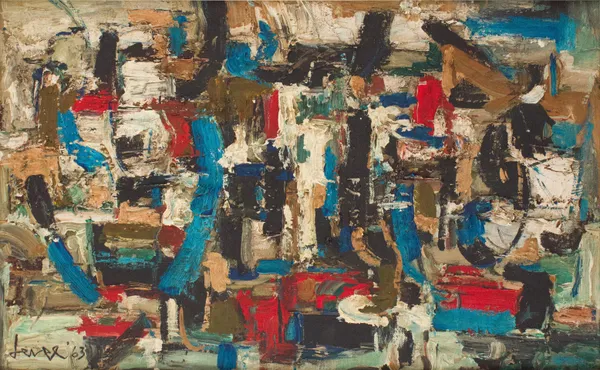
Increasingly in the 1940s, Browne adopted an energetic, gestural style. Painterly brushstrokes and roughly textured surfaces amplify the primordial undercurrents posed by his symbolic and mythical themes. In 1945 Browne showed with Adolph Gottlieb, William Baziotes, David Hare, Hans Hofmann, Carl Holty, Romare Bearden, and Robert Motherwell at the newly opened Samuel Kootz Gallery. When Kootz suspended business for a year in 1948, Browne began showing at Grand Central Galleries. In 1950, he joined the faculty of the Art Students League, and in 1959 he began teaching advanced painting at New York University.

The three works in the Frost collection, Abstract Collage (1933), Head (1938), and Chinese Dancer (1949), represent distinct phases in Browne's artistic career. The collage, created at a time when he was fascinated with Cubism, is a lyrical, delicately balanced work in which calligraphic line, imposed or incised, moves freely across the surface of the paper. The boldly colored, unrefined shapes ofHead and the tactile surface of Chinese Dancer are premonitions of the Abstract Expressionism that would be the hallmark of Browne's later work. Browne died in 1961 in New York City a celebrated modernist.

Exhibitions:
National Academy of Design, 1928,1929 Art Institute of Chicago, 1928, 1935, 1946 Corcoran Gallery, 1928, 1930, 1947, 1953, 1957 Pennsylvania Academy of Fine Art, 1930, 1931, 1936, 1946-47, 1951, 1954 Whitney Museum of American Art, 1935, 1937, 1939, 1946 Museum of Modern Art, 1939 Carnegie Institute, 1946

Collections:
Hirshhorn Museum and Sculpture Garden, Washington, DC Smithsonian American Art Museum, Washington, DC Edwin A. Ulrich Museum of Art, KS The Brooklyn Museum of Art, NY Whitney Museum of American Art, NY Pennsylvania Academy of Fine Art, PA Carnegie Institute, PA